Archives
- 2026-06
- 2026-05
- 2026-04
- 2026-03
- 2026-02
- 2026-01
- 2025-12
- 2025-11
- 2025-10
- 2025-09
- 2025-03
- 2025-02
- 2025-01
- 2024-12
- 2024-11
- 2024-10
- 2024-09
- 2024-08
- 2024-07
- 2024-06
- 2024-05
- 2024-04
- 2024-03
- 2024-02
- 2024-01
- 2023-12
- 2023-11
- 2023-10
- 2023-09
- 2023-08
- 2023-07
- 2023-06
- 2023-05
- 2023-04
- 2023-03
- 2023-02
- 2023-01
- 2022-12
- 2022-11
- 2022-10
- 2022-09
- 2022-08
- 2022-07
- 2022-06
- 2022-05
- 2022-04
- 2022-03
- 2022-02
- 2022-01
- 2021-12
- 2021-11
- 2021-10
- 2021-09
- 2021-08
- 2021-07
- 2021-06
- 2021-05
- 2021-04
- 2021-03
- 2021-02
- 2021-01
- 2020-12
- 2020-11
- 2020-10
- 2020-09
- 2020-08
- 2020-07
- 2020-06
- 2020-05
- 2020-04
- 2020-03
- 2020-02
- 2020-01
- 2019-12
- 2019-11
- 2019-10
- 2019-09
- 2019-08
- 2019-07
- 2019-06
- 2019-05
- 2019-04
- 2018-11
- 2018-10
- 2018-07
-
br Potential and established risk factor for Alzheimer s
2024-05-28
Potential and established risk factor for Alzheimer’s Disease The only way to overcome the above mentioned limitations is the identification of risk factors, which, taken together, can reliable predict the development of AD. Age and ApoE4 are established non-modifiable risk factors for AD. The ri
-
While the mechanisms by which
2024-05-28
While the mechanisms by which ALDH2 regulates cardiac responses to pathological stress remain unclear, the capillary rarefaction found in pressure-overloaded ALDH2 Tg hearts provides potential clues. Loss of capillary density and diminished endothelial function occur in pathological hypertrophy [46]
-
Retigabine dihydrochloride Taken together the results reveal
2024-05-28
Taken together, the results reveal a complex feedback and feedforward signaling network between the tryptophan metabolic enzymes IDO1/TDO2, the KP metabolite KYN, and the ligand-activated transcription factor AhR (Figure 2). Cancer Retigabine dihydrochloride highjack this signaling circuitry to der
-
Mechanistically NAergic signaling in the
2024-05-28
Mechanistically, NAergic signaling in the VTA modulates neuronal activity presumably via α1-AR. The majority of α1-ARs are found in the VTA are located presynaptically on unmyelinated Y-27632 mg and axon terminals of glutamatergic and GABAergic neurons. However, α1-ARs are also found on neuronal de
-
br Methods br Results br
2024-05-28
Methods Results Discussion Adiponectin is naturally expressed and secreted exclusively from adipocytes, and adiponectin levels and its isoforms in circulation have recently been reported to highly associate with human coronary artery disease (CAD) [46], [47], [48], [49], these studies clear
-
Adiponectin belongs to the CTRP C q TNF related
2024-05-28
Adiponectin belongs to the CTRP (C1q/TNF-related protein) superfamily. Except for adiponectin, 15 additional members have been identified (CTRP1-15) (Schaffler and Buechler, 2012). Of all the CTRPs, CTRP9 has the highest identity to adiponectin in globular domain (Wong et al., 2009). The structure
-
Voluminous literature about the neuroendocrine
2024-05-28

Voluminous literature about the neuroendocrine mechanism of reproduction and energy regulation has emerged from studies involving mammalian species. The avian infundibular nucleus (equivalent structure to the mammalian arcuate nucleus) consists of two neuronal populations, one of which expresses neu
-
To investigate further the clinical and mutational
2024-05-28
To investigate further the clinical and mutational spectrum associated with -related dyskinesia, we here performed a screen in a large series of patients affected with an unexplained hyperkinetic movement disorder, resulting in the identification of 2 pediatric patients presenting with a novel pheno
-
In the vasculature it is known that A A
2024-05-28
In the vasculature, it is known that A2A and A2B adenosine receptors are stimulatory for adenylyl-cyclase, leading to cyclic-AMP (cAMP) production and vasodilation, while the A1 and A3 adenosine receptors are linked to the inhibitory Gi, suppressing adenylyl-cyclase and favoring contraction. However
-
Adenosine receptors activate a number
2024-05-28
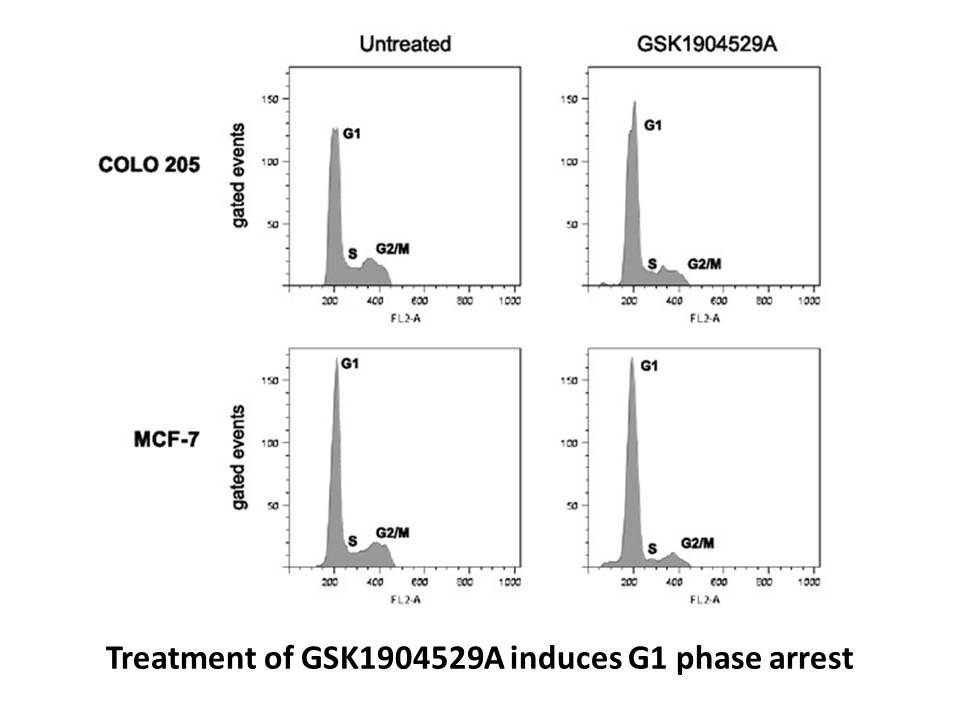
Adenosine receptors activate a number of signalling pathways involved in tissue survival including several mitogen-activated protein kinases (Fredholm et al., 2001). The common feature of all adenosine receptors is the positive coupling to ERK1/2, whilst A2B and A3 receptors can also activate the st
-
To date the modes of actions of
2024-05-28

To date, the modes of actions of pharmaceuticals in humans and mammals are well-known (Fent et al., 2006), whereas knowledge of aquatic organisms, particularly invertebrates, is limited. This is problematic as these contaminants/pollutants have potentially harmful effects on wildlife organisms that
-
br Materials and methods br Results The determination of
2024-05-28

Materials and methods Results The determination of the intrinsic inhibitory potential of the oximes HI-6 and MMB-4 with human and guinea pig AChE revealed marked differences between both oximes (Table 1). MMB-4 had an only marginal effect on both AChE species, calculated IC50 of >1000μM, while
-
Interestingly a homolog of C elegans acr is present
2024-05-28
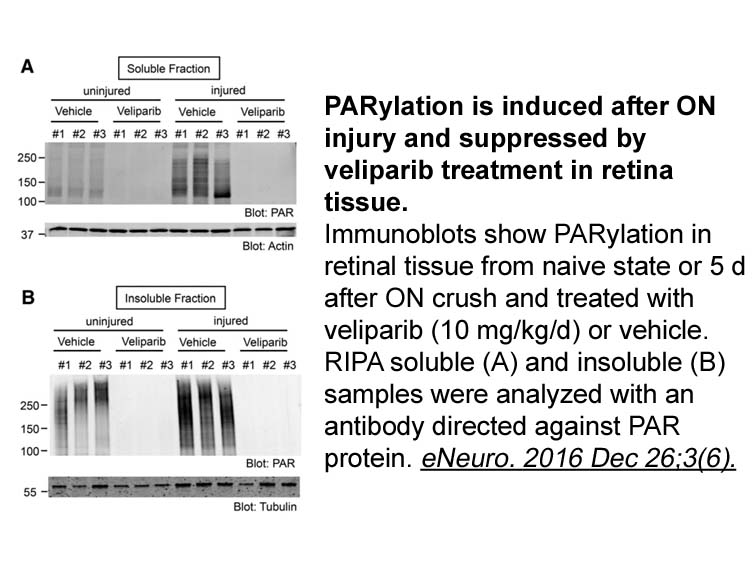
Interestingly, a homolog of C. elegans acr-23 is present in the A. suum I-BET-762 (Jex et al., 2011). However, A. suum is not susceptible to monepantel treatment in vivo (Tritten et al., 2011). Our research seeks to advance knowledge on the mode of action of monepantel on nAChRs from Clade III (A. s
-
Azimilide br LOX in pancreatic cancer LOX
2024-05-28
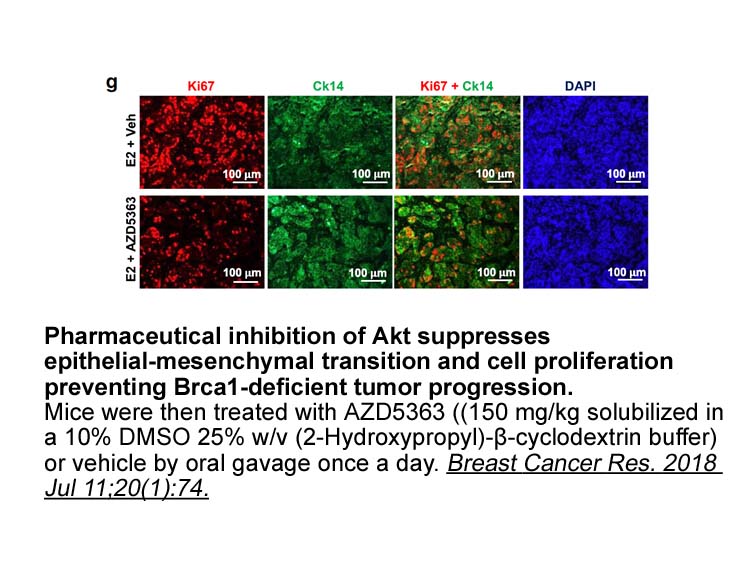
5-LOX in pancreatic cancer 5-LOX is a key player in pancreatic cancer (PC) progression. The upregulation of 5-LOX mRNA has been observed in pancreatic adenocarcinoma (PDAC) and also in neoplastic pancreatic tissues (Kennedy et al., 2003). Higher levels of 5-LOX transcripts (messengers) are presen
-
Previously several genes such as cytokine Lyu
2024-05-28
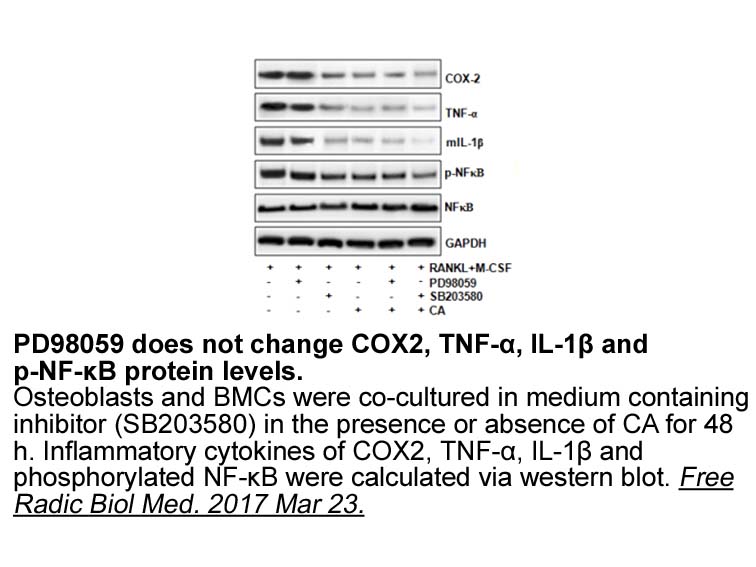
Previously, several genes such as cytokine (Lyu and Park, 2007), cell motility-associated genes (Schotterl et al., 2017), transforming growth factor-β (TGF-β), TGF-β receptor II which is a cell surface receptor with serine/threonine kinase activity (Jiang et al., 2014, Schotterl et al., 2017), cell
16109 records 162/1074 page Previous Next First page 上5页 161162163164165 下5页 Last page